
Conservation-Led Ocean Expeditions: From the Sardine Run to Remote Socotra
Journeys where marine science, exploration and ocean storytelling meet
At the heart of Seas4life is a simple idea: that travel can deepen our understanding of the ocean rather than simply pass through it. Founded by Julie Church, the journeys are designed around places where the sea still feels wild and the science behind it matters. Guests might find themselves observing marine migrations that reshape entire ecosystems or assisting researchers quietly documenting life beneath the surface. As Julie often explains, the aim is not simply adventure but connection — experiences that allow travellers to “connect to these rare, vulnerable places before they’re gone.” The two expeditions below offer a glimpse into that philosophy in practice: journeys where exploration, research, and respect for the ocean come together.
South Africa: Shark Research & Sardine Run Expedition
Dates: June 26th – July 6th, 2026
This expedition focuses on the planet’s largest marine migration where billions of sardines travel along the South African coastline. The event triggers a massive feeding frenzy involving super-pods of common dolphins, humpback whales, Bryde’s whales, Cape gannets, and various shark species like dusky and bronze whalers. Unlike typical rough-and-tumble dive trips, this expedition utilises a microlight plane, an “eye in the sky” to spot bait balls from above. This aerial support drastically reduces time spent searching for action and allows the boat to position divers perfectly for ethical, low-impact interactions with the wildlife.
The itinerary is split into two distinct segments. The first leg takes place on the Wild Coast for the Sardine Run. This segment is defined by “white glove” service designed to remove the discomfort usually associated with cold-water diving. This includes private chefs, gourmet meals, and a dedicated wetsuit drying service that ensures guests receive warm, dry gear delivered to their rooms every morning before launch.
The second leg moves to Aliwal Shoal for a shift toward citizen science and reef diving. Aliwal is a Marine Protected Area (MPA) where tropical and temperate currents meet, creating a unique habitat for Ragged-tooth sharks, tiger sharks, and bull sharks. Here, guests transition from observation to active research, assisting the Shark Research Unit by photographing shark spot patterns for population tracking and monitoring ray and turtle behaviours.
Socotra Island: Underwater Explorative Diving Expedition
Dates: October 16th – 23rd, 2026
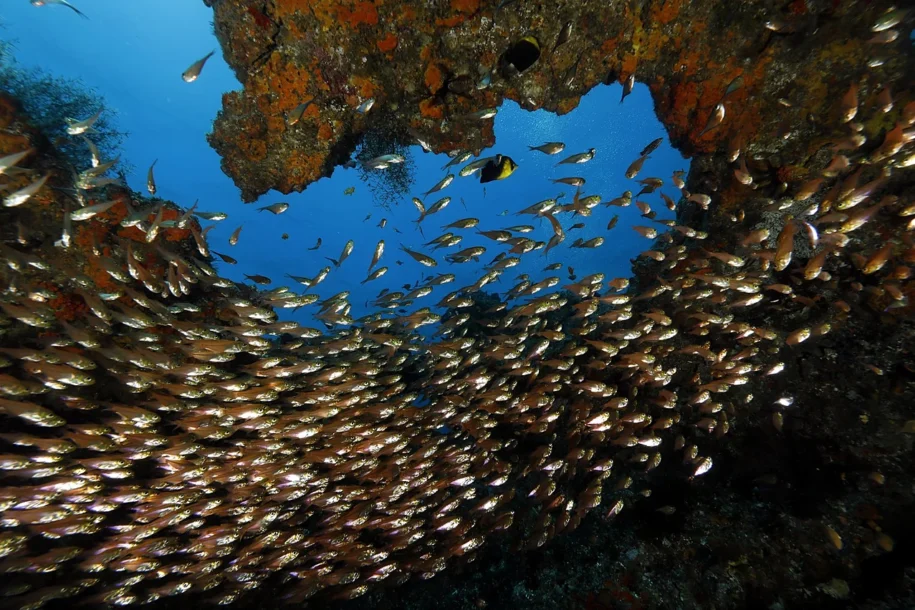
Often described as the “Galápagos of the Indian Ocean,” Socotra offers a frontier exploration experience in one of the most remote and biodiverse archipelagos on Earth. This expedition is strictly limited to seven participants and focuses on “first-in-the-world” discoveries, taking divers to untouched reefs, towering underwater walls, and shipwrecks that have rarely been visited. Located where the Red Sea meets the Indian Ocean, the marine environment is a mix of Arabian and African fauna, offering a chance to encounter species found nowhere else.
The expedition is designed as a mobile adventure. The group utilises private mobile camps that shift location every two to three nights, allowing for a deeper immersion into the landscape. Facilities are “glamping” style, featuring cotton canvas tents, solar lighting, and bucket showers, set against the backdrop of Socotra’s vast, unpolluted skies. The journey is not limited to the ocean; it includes inland treks to the Diksam Plateau and the Firmihin Forest to witness the alien-like Dragon’s Blood Trees, ensuring guests experience the island’s terrestrial biodiversity as well.
Because Socotra is off-grid, this trip requires a spirit of adventure. It is a cash-only destination with limited connectivity, emphasising a complete disconnection from the modern world. Guests arrive via a specific humanitarian flight from Abu Dhabi, adding to the feeling of entering a truly isolated ecosystem. Like the South Africa trip, this expedition integrates citizen science, where divers help chart new sites and collect data on reef health to support local conservation partners.
Travelling with purpose in some of the ocean’s last wild frontiers
What emerges from journeys like these is not just a collection of remarkable encounters, but a deeper awareness of the fragile systems that sustain life in the ocean. Whether witnessing the raw energy of the sardine migration along South Africa’s Wild Coast or exploring the largely untouched reefs surrounding Socotra, the thread running through each experience is curiosity and care. Seas4life trips are intentionally small and thoughtfully led, bringing travellers alongside scientists, conservationists and local experts who understand these environments intimately. The result is something rarer than a conventional itinerary — the chance to step briefly into the rhythm of the ocean itself, and to return home seeing it with entirely new perspective.
Find out more about Seas4Life.