
Kenya Fly Fishing Expedition: Into the Wild Lamu Archipelago
A remote sailfish expedition shaped by local knowledge and conservation
There are places where the experience of being on the water is as important as what you might encounter there. The remote northern coast of Kenya, stretching through the Lamu Archipelago, is one of them.
This November, Seas4Life is heading into these waters with just six anglers for a seven-day fly fishing expedition, timed to coincide with the peak of the northern sailfish run. But this is not simply about the fishing. It is about being in the hands of people who know these waters intimately, understanding what is happening beneath the surface, and using the opportunity to contribute to what we know about the species that move through them.
A coast known by those who live there
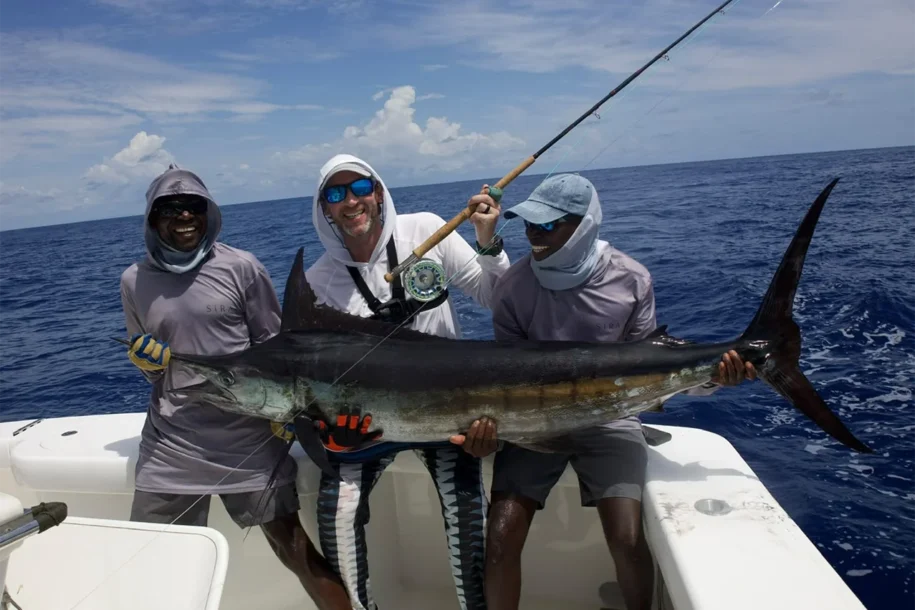
Leading the fishing operation is Captain Alex Haller, who was raised on this coast and holds two world records for billfish on the fly. Alongside an expert crew, he will guide the two dedicated fly boats, Sirai and Cheza, helping anglers understand the intricate bait-and-switch technique used to target sailfish.
The timing is critical. At the height of the run, anglers can raise upwards of 30 sailfish in a single day. The technique is highly visual and technical: the crew teases the fish towards the boat before the angler presents the fly at precisely the right moment.
Joining the expedition is Julie Church, bringing more than 25 years of marine conservation experience to the journey. Her role reflects something fundamental to Seas4Life: the ocean is never simply a backdrop to the experience. Understanding it is part of the experience itself.
There is also the possibility of a cetacean specialist joining the expedition, using hydrophones to listen to and monitor the region’s blue whales.
Fishing that gives something back
Conservation sits at the core of this journey. Every sailfish is released and none is brought aboard. Instead, each fish is tagged using traditional tags for The Billfish Foundation’s global database.
The data contributes to a much bigger picture, helping researchers understand sailfish migration and population connectivity and laying the groundwork for full-scale satellite tagging planned for 2027.
This is one of the things that makes a Seas4Life expedition different. Guests are not simply travelling through an extraordinary marine environment; they have the opportunity to contribute to our understanding of it.
Life abord a Swahili dhow
When the fishing day is over, the expedition returns to the Tusitiri, a hand-built traditional Swahili dhow that becomes a calm, floating base for the journey. With full-board dining served on deck, it offers a very different perspective on the coast — one shaped by the rhythm of the sea rather than a conventional itinerary.
And perhaps that is what makes fly fishing in Kenya particularly compelling in a place like this. The expertise, the wildlife, the traditional dhow and the remote coastline are all part of the experience, but underneath it is a deeper connection to the ocean and the people who know it best.
22–28 November 2026 | Six anglers | Northern Kenya and the Lamu Archipelago
Find out more about Seas4Life.