
THE INNER WORKINGS OF A TAILOR MADE TRIP – When the people organising your trip to the Alps (or elsewhere) live and work there too – SwisSkiSafari
I often wonder if people really understand what it is that we do as trip planners who are designing and executing your travel experiences.
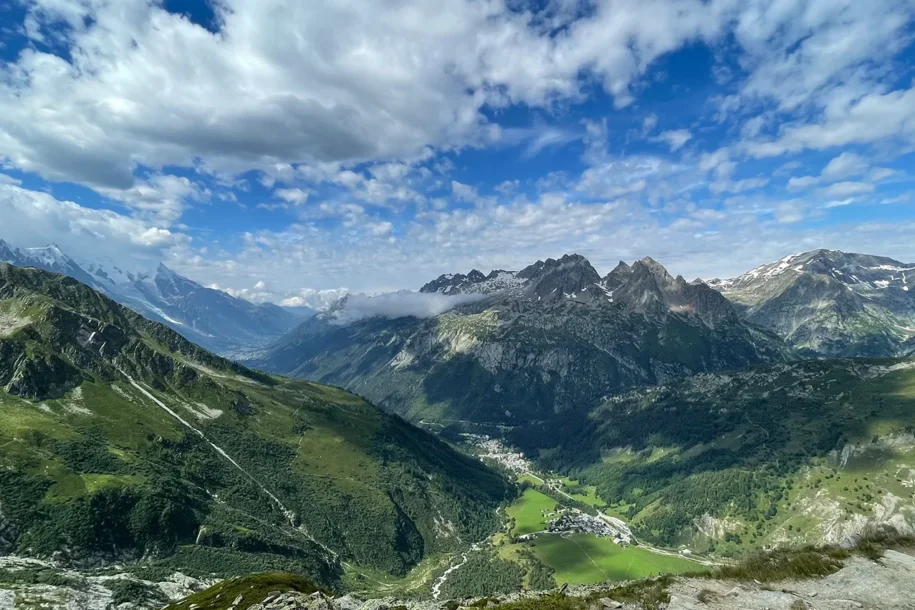
Living in the region where you work, and specialising only in what you know intimately, changes everything. I don’t sell trips all over the world. I focus on one geographical region and the activities that this landscape lends itself to. In my case, that’s hiking and biking in summer, and skiing and snowboarding in winter.
We’re using the same geographical environment throughout the year, but the conditions couldn’t be more different. A mountain range covered by a few metres of snow becomes an entirely different world. At the highest recorded point in our region, snow accumulation has reached 19 metres. The Alps are constantly changing, and so is the way we move through them.
As I settle back into the season and the work involved in designing summer journeys, it feels like a good moment to try and explain what creating tailor made Alpine trips really involves.
It starts long before the booking
Firstly, it’s not just about booking hotels, restaurants and guides.
It starts with getting to know our guests as much as possible and then searching through the database in my head, piecing together experiences that match what my guests imagine for their trip.
The region where we work is a special one. The climate is unique. It can be raining on one side of the mountain and sunny on the other. Businesses open and close according to their own rhythms. People don’t always answer the phone; sometimes you simply need to knock on the door.
Often, to make things work for a group, we need special access. Perhaps a group needs to stay together, or family members want to join for lunch midway through a journey. It becomes a constant exercise in problem solving, a little like assembling a puzzle. The challenge is that when you move one piece, it affects many others. What appears simple on the surface can have countless knock-on effects behind the scenes.
This is also part of the magic of Europe. It isn’t like the New World. People do things in their own way, in their own time, often for reasons that have nothing to do with commercial logic. Information is valuable and rarely handed over easily.
Recently, while preparing for a trip, I received information from three different tourist offices across three countries. Almost all of it was incorrect. A few phone calls to trusted local contacts later, businesses that were supposedly closed were suddenly open, and access had been arranged for our guests.
Without living in the region and maintaining these relationships, it would be impossible to create the sort of trips that we do. It takes perseverance, a willingness to go the extra mile, and an incredible network of people we’ve built relationships with over more than twenty years.
The small details matter
The same applies to where we recommend guests dine in the evening.
We choose each restaurant based on where the group has been that day. Sometimes it’s the finest table in the area. Sometimes it’s the most authentically local. Sometimes it’s simply the place with an atmosphere they’ll remember long after the meal is over. More often than not, it’s a combination of all three.
We’ve also thought about the rhythm of the day itself. Where was lunch? How demanding was the hike? What sort of evening will bring the day to the right close?
The result, hopefully, isn’t just a list of excellent restaurants. It’s the right restaurant at exactly the right moment.
Reading the mountain
Once the trip begins, it becomes a little like playing a team sport.
You need to be able to read the field without seeing all of it at once. You need temporal awareness — understanding what is happening right now. You need situational and anticipatory awareness — understanding what is likely to happen next.
This is perhaps the most important skill of all. If you’re paying attention, you can often prevent accidents and problems before they occur simply by being observant.
Pattern recognition also plays a role. Have I seen this situation before? If so, how can we make it smoother this time?
I remember one occasion on a mountain path with a significant drop-off. I stopped the group while I pretended to tie my bootlaces. At the same time, I quietly asked the guide to position himself behind one particular guest while I moved to the front.
Moments later, that guest stepped off the path. The guide was able to grab their backpack and prevent a potentially serious fall.
These are situations we hope never happen, but we are prepared when they do.
Experience, networks and care
I could go into much greater detail, but I think the common denominator is simple.
We genuinely want our guests to have the best possible experience. Our role is to combine local knowledge, experience, relationships and care to make that happen.
The best tailor made Alpine trips are not defined by hotels, restaurants or mountain routes alone. They are shaped by countless small decisions, made quietly in the background by people who live and work in the region every day.
Often, the things guests never see are the very things that make the journey unforgettable.
Find out more about SwisSkiSafari